Economic Development Needs a Seat at the Table This Election
2022 Tiny Township council candidate Ema Canadic argues that strong economic development planning is critical to the long-term sustainability of North Simcoe communities. Drawing on more than five years of experience with the Economic Development Corporation of North Simcoe (EDCNS), she reflects on the benefits of a coordinated regional strategy that once linked Tiny Township, Tay Township, Midland, and Penetanguishene under a shared economic vision. With the dissolution of the EDCNS, Canadic warns municipalities must take a more active role in shaping clear, community-driven plans instead of relying on reactive decision-making. Ahead of the municipal election, she calls on residents to demand concrete answers from candidates about their economic priorities, public engagement, and long-term vision for the region.
Ema Canadic
5/17/20263 min read
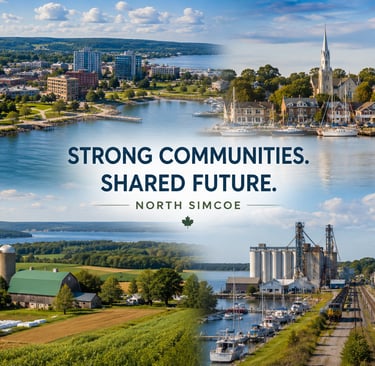
When people ask me why I care so much about economic development, I usually point to the years I spent on the Economic Development Corporation of North Simcoe (the EDCNS), a shared board that served Tiny Township, Tay Township, Midland, and Penetanguishene. For more than 5 years, that work shaped how I think about community, planning, and what it actually takes for a municipality to grow in a way that works for its residents. I have a formal education in economic development, and I've watched up close what happens when communities take it seriously - and what gets lost when they don't.
That's why I'm writing this now, with a municipal election on the horizon.
What We Had and What We Lost
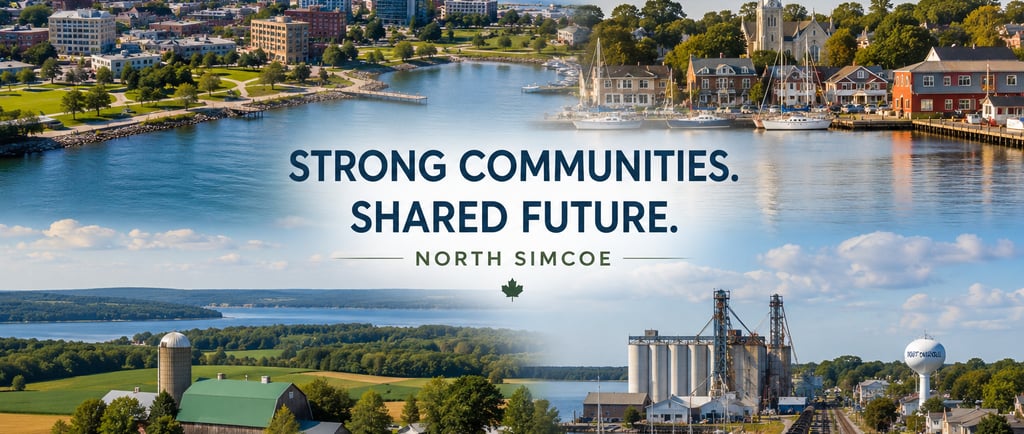
The EDCNS wasn't just a bureaucratic body. It was a structure that gave four distinct municipalities a shared economic vision while still respecting the unique strengths of each. Tiny Township brought its agricultural roots and quiet rural character. Tay contributed its residential growth potential and its deep ties to the railway and marine history that once defined Port McNicoll. Midland anchored the region with its manufacturing base, commercial activity, and Georgian Bay waterfront. Penetanguishene added its own distinct draw - a working harbour, a rare French-English cultural identity, and healthcare infrastructure that serves the broader region.
That model: one economic development director, one coordinated strategy, four communities working in the same direction - was rare and genuinely valuable. When the EDCNS was dismantled roughly a year and a half ago and its mandate was folded into a business incubator model, that regional lens disappeared. And for all the merit a business incubator can offer, it is not the same thing as a comprehensive economic development strategy. Supporting new entrepreneurs is one piece of the puzzle. It is not the whole puzzle.
Why This Election Matters
Here's the uncomfortable truth: you can elect a perfectly well-intentioned council and still end up with a community that's drifting economically, if that council doesn't come in with a clear economic vision; one developed with public input and grounded in an understanding of what the municipality actually has to offer and where it could realistically go.
Without that vision, decisions don't compound toward a goal. They just accumulate. A zoning change here, a development approval there, a new program that sounds good in isolation. None of it adds up to anything coherent if there's no north star guiding the direction. It's the difference between building something and simply not stopping things from being built.
Every council makes decisions that affect economic outcomes: land use, infrastructure investment, which businesses get supported, what gets prioritized in a budget. When those decisions aren't connected to a broader economic development plan, they become reactive rather than strategic. And communities that only react rarely end up where they hoped to be.
What Candidates Should Be Asked
With the EDCNS gone, the responsibility for economic development now rests more squarely on each individual municipality than it has in years. That makes it especially important that candidates for council in Tiny Township and across North Simcoe, are prepared to answer some direct questions:
What is your economic vision for this community? Not just "support local business" or "attract investment" but specifically: which industries, which opportunities, and what does success look like in ten years?
How do you plan to develop that vision with input from residents? Economic development doesn't happen to a community; it happens with one. Residents, farmers, business owners, and young families all have a stake in what this place becomes.
And perhaps most importantly: how will you make sure the decisions your council makes are connected to that bigger picture, rather than handled case by case without a common thread?
The Bottom Line
Economic development isn't a niche issue for specialists. It's the foundation under every conversation about jobs, housing affordability, local services, and quality of life. When a regional body like the EDCNS exists, some of that work gets done at a higher level. Now that it doesn't, our municipalities have to carry more of that weight themselves.
This election is a chance to choose councillors who understand that and who will show up ready to do that work, not just manage the day-to-day.
Ask the hard questions at candidate nights. Push for specific answers. The community deserves a council with a plan, not just good intentions.